
Searching for Hearth and Home: Finding Healing with the Focolare Movement
[Editor’s Note: Alex published an article in the September-October 2026 issue of Living City, a magazine printed by Focolare Media, in which he speaks about how the spirituality of the Focolare movement has enriched his ministry to adult children of divorce. To view that issue, click here.]
Introduction
Christopher Nolan’s motion picture of Homer’s The Odyssey captured the imagination of countless movie-goers this past summer. So much could be said of this epic poem but one theme that is prominently featured is that of returning home. Odysseus has been away for twenty years, and the entire tale recounts his adventure of trying to return to Ithaca. This perhaps stirs up some emotions for adult children of divorce because we often struggle with this concept. After all, mom and dad do not live in the same place anymore, so where is home?
When we speak of divorced parents, we tend to speak of “mom’s house” and “dad’s house”. Right? We tend to not use the terms “mom’s home” and “dad’s home.” We children do not come from just one person; we are the fruit of a bond between two specific people. It could even be said that the living bond between mom and dad was more our home than any physical building or geographical location ever was. The bond uniting our mom and dad has essentially been cancelled, and perhaps as a result we children feel ontologically homeless. ‘Ontos’ is a Greek word meaning “being.” In other words, the bond between mom and dad may not be the physical ground on which we stand, but it is the grounds of our existence in this world. In that sense, when their bond “dissolves,” we are often left feeling homeless in a profound way.
It is all so ironic because we are often told, “You’re lucky: you have two homes instead of just one!” In reality, we often feel as though we have two houses but no home. Think about the experience of going back and forth between mom and dad’s houses: many of us have had to live out of a suitcase or a duffel bag, right? We often feel like a guest (even a very welcome one) in both houses, but we still feel like a resident of neither. At a deep level, we realize that we are not an essential part of either house; each one continues to go on, whether we ourselves are there or not. Some children of divorce feel a sense of restlessness if he or she lives in one house or area for too long, so they are constantly on the move. Needless to say, this rootlessness tends to cause complications.
I draw out this struggle because I would like to share my own experience of homelessness and how an ecclesial movement has helped me recover what was lost.
My Story
My twin brother and I were the oldest two of six kids to Catholic parents in small town western Pennsylvania. We all went to Catholic school, went to mass together, and prayed the rosary every Sunday. My parents even taught marriage prep and Natural Family Planning classes together for a while—we were seen by many as a happy, humble, Catholic family.
Our living room, specifically, was a place where an abundant—albeit humble—life was lived. There, my twin brother and I would wrestle with our dad, do our chores and homework, watch Pittsburgh Steelers games, and play video games together. The living room was also where my mom would play the piano from time to time, our relatives would celebrate our birthdays, our toys were sprawled out across the floor on Christmas morning, and my dad would keep my brother and me up late into the night to teach us life lessons. It was in the living room that I received joyful news, like each time I was told that I was going to have another sibling. It was also where I received terrible news, like the night I was told that my Uncle Dave had died suddenly of a heart attack. There was even a disastrous occasion when a wild turkey lost control mid-flight and crashed into the living room window! This became a funny story that my siblings and I have recalled for many years.
My point in painting this picture is to show the united family life that we had: our living room in particular was a place of profound unity and warmth and life for my family. It was in every sense exactly what it was called: a living room.
A strong Catholic foundation notwithstanding, my parents separated and divorced in 2010-11, during my senior year of college. By the time I graduated, my mom had moved away and my dad had put our childhood home up for sale. I was able to go see the house one final time before it sold. This place, which had been so warm and full of life for so many years, was now empty, dark, and quite literally cold. It was an unspeakably grave loss and there was no proper “goodbye” or mourning. To this day, I often have dreams that take place in the setting of that home.
On account of my parents’ divorce, I set out on a personal quest for truth and healing. Over the last fifteen years I have been able to work through issues with each of my parents, and I now have good relationships with both. I have made tremendous progress in my own journey, but until recently, I was still missing the treasure of the living room.
Finding a Home in the Focolare Movement
In 2021, I first encountered an ecclesial movement called “the Focolare” in Rome. I did not know much about it at the time, but since then I have slowly been learning more about its origin and spirituality. The Focolare movement began in Italy in the 1940s, in the context of World War II. Chiara Lubich, the foundress of this movement (now deceased and declared a Servant of God), was a teenager at that time in Trento, Italy. During the air raids, Chiara and her friends would hide in the underground bomb shelters and read Scripture by candlelight. During one air raid, they read the Gospel of John, and they were struck by a phrase that Jesus says in his high priestly prayer: he prayed “that they may be one.” (Cf. John 17:21) In the context of division and hatred between peoples, religions, and nations in the world at that time, it is not difficult to understand why this line about unity caught their attention.
Chiara and her friends dedicated themselves to radically living out the call of the Gospel. They decided to consecrate themselves to God, but rather than join a convent and wear habits, they wanted to remain in ordinary clothes and live in a regular home together, so that they could minister to all those who were becoming homeless because of the war right there in their own living room.
Little by little, more people began following this way of life, becoming consecrated and living together in the same way as Chiara and her friends in the beginning. By 1962 this movement was recognized by the Vatican, and on June 19, 1990 it received recognition by the Pontifical Council for the Laity. It is officially called the “Work of Mary,” although it is colloquially known as “the Focolare,” which is the Italian word for hearth or fireplace. It took on this name because it was around the fireplace in their living room that Chiara and her companions first started their ministry. The movement spread far and wide, and now there are men’s and women’s “Focolare houses” all around the world. Priests, married people, and children are all part of this movement too, but the heart of the movement remains these focolarini (consecrated men and women) who are dedicated to seeking unity in many different ways.
In the past five years, since I first encountered the Focolare, I have spent time at men’s and women’s Focolare houses both in Rome and in the United States. As I have done so, something very interesting has been happening: I feel more and more like I have found a lost treasure. I am once again able to gather in a living room where everyone is all together—there are no secrets, grudges, reservations, ulterior motives, or escape plans. We are simply united. As I began to learn more about the history and spirituality of the Focolare, it is clear now why I have felt so at home: I had been made homeless and orphaned because of the war between my parents, and with this movement I find myself in a community of life, love, and unity in the living room. Although the circumstances are a little different–I am not in a war zone with literal bombs–the spirituality of the Focolare movement has deepened to include reaching people like me, affected by the war of divorce.
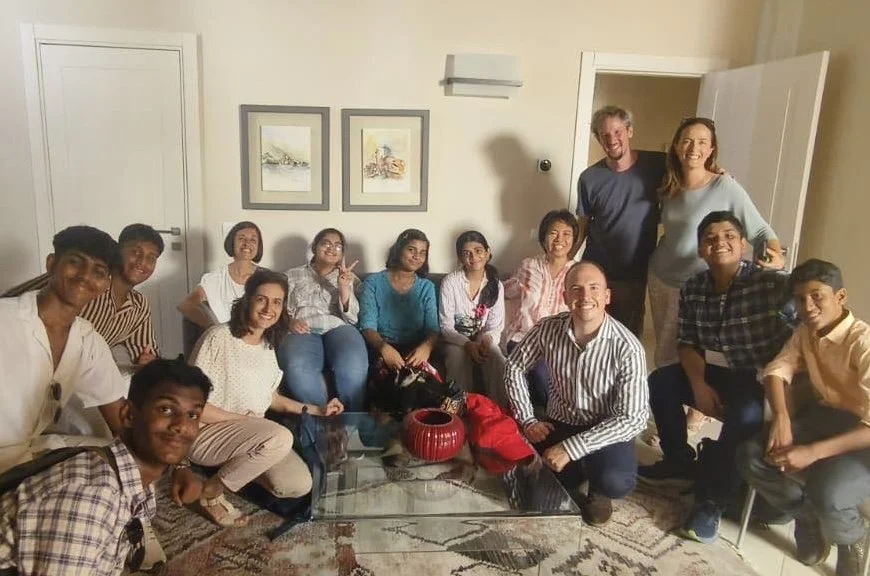
Taking care of young pilgrims with a Focolare in Rome, July 2024
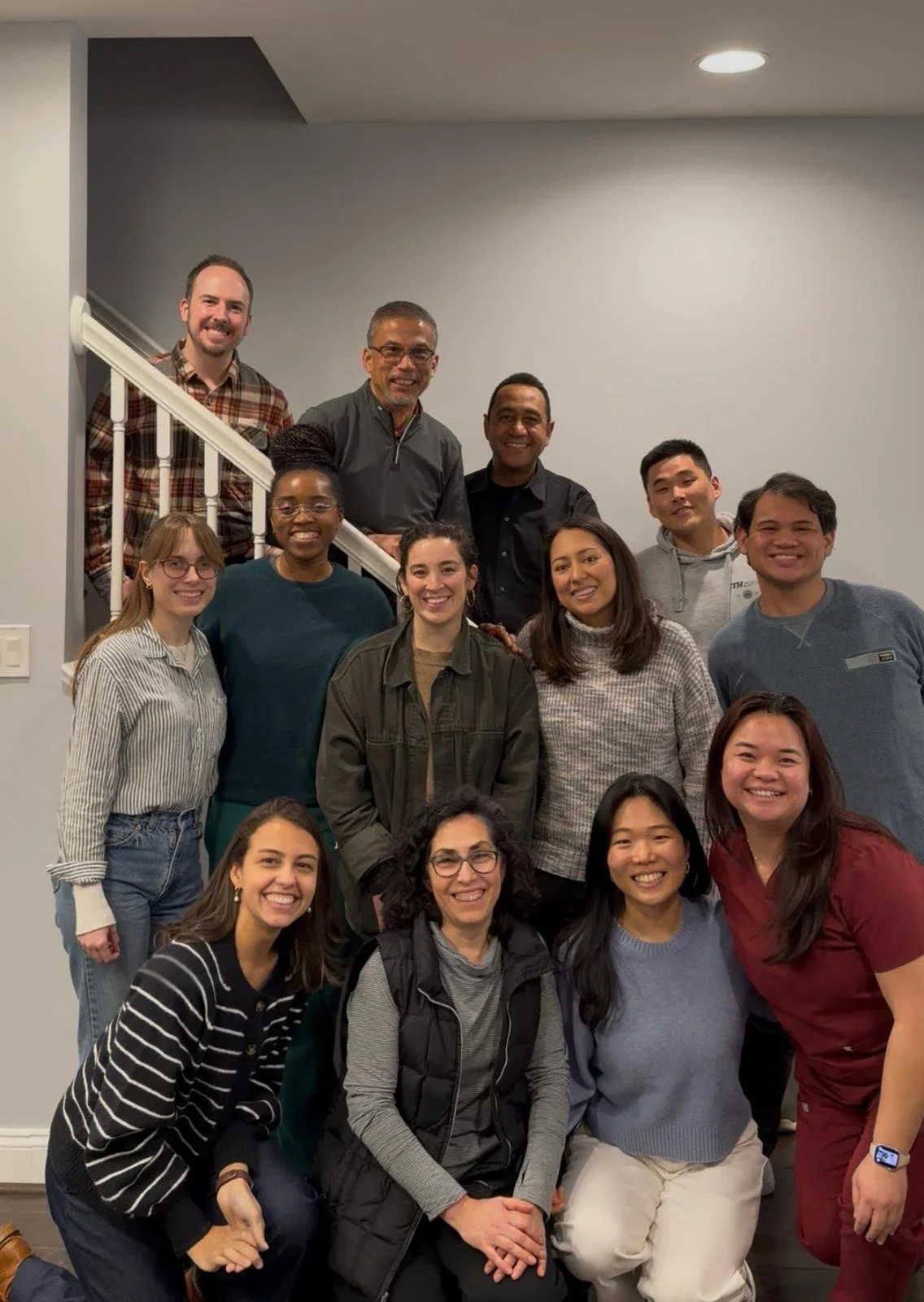
Gathering for Mass and pizza at a Focolare house in Washington, D.C., February 2026
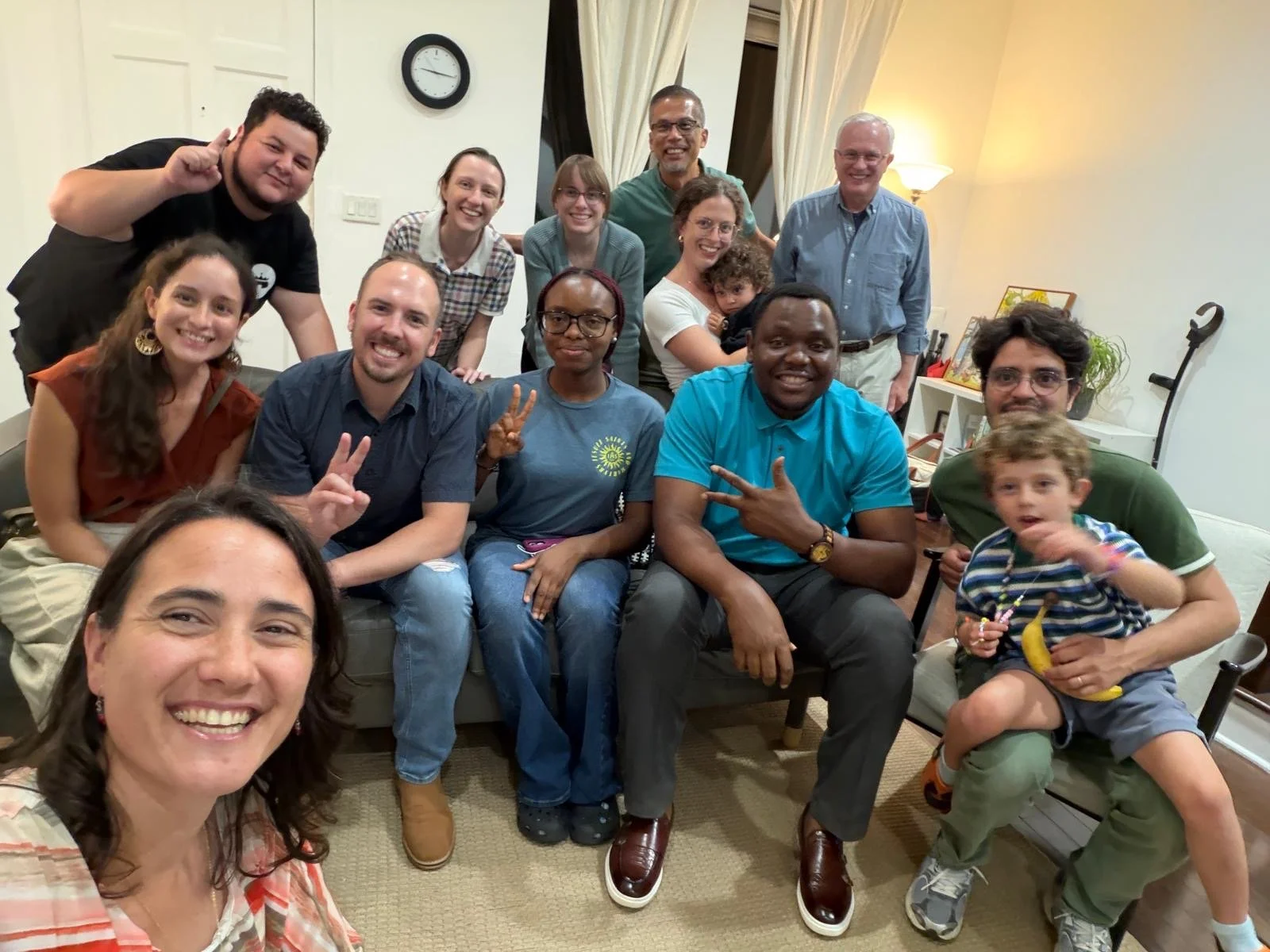
My Focolare small group in Washington, D.C., September 2026
Conclusion
The search for home can be long and arduous, just as it was for Odysseus. When he finally drew near to his home, he could not simply waltz in; he actually had to prove himself in a way and even fight for his right to be there. In the end, we trek onward because where else would we go? Even though mom and dad are not getting back together, there are ways in which we can receive back what was lost, for truly the grounds of our existence is the infinite love of God the Father, not just the bond between our parents. If you are searching for home, know that I feel you. Let us journey forward together, firmly believing that God can give back a hundred times what we have lost.
For prayer, we encourage you to meditate on this passage of Scripture (John 17:1-26):
When Jesus had said this, he raised his eyes to heaven and said, “Father, the hour has come. Give glory to your son, so that your son may glorify you, just as you gave him authority over all people, so that he may give eternal life to all you gave him. Now this is eternal life, that they should know you, the only true God, and the one whom you sent, Jesus Christ. I glorified you on earth by accomplishing the work that you gave me to do. Now glorify me, Father, with you, with the glory that I had with you before the world began.
“I revealed your name to those whom you gave me out of the world. They belonged to you, and you gave them to me, and they have kept your word. Now they know that everything you gave me is from you, because the words you gave to me I have given to them, and they accepted them and truly understood that I came from you, and they have believed that you sent me. I pray for them. I do not pray for the world but for the ones you have given me, because they are yours, and everything of mine is yours and everything of yours is mine, and I have been glorified in them. And now I will no longer be in the world, but they are in the world, while I am coming to you. Holy Father, keep them in your name that you have given me, so that they may be one just as we are. When I was with them I protected them in your name that you gave me, and I guarded them, and none of them was lost except the son of destruction, in order that the scripture might be fulfilled. But now I am coming to you. I speak this in the world so that they may share my joy completely. I gave them your word, and the world hated them, because they do not belong to the world any more than I belong to the world. I do not ask that you take them out of the world but that you keep them from the evil one. They do not belong to the world any more than I belong to the world. Consecrate them in the truth. Your word is truth. As you sent me into the world, so I sent them into the world. And I consecrate myself for them, so that they also may be consecrated in truth.
“I pray not only for them, but also for those who will believe in me through their word, so that they may all be one, as you, Father, are in me and I in you, that they also may be in us, that the world may believe that you sent me. And I have given them the glory you gave me, so that they may be one, as we are one, I in them and you in me, that they may be brought to perfection as one, that the world may know that you sent me, and that you loved them even as you loved me. Father, they are your gift to me. I wish that where I am they also may be with me, that they may see my glory that you gave me, because you loved me before the foundation of the world. Righteous Father, the world also does not know you, but I know you, and they know that you sent me. I made known to them your name and I will make it known, that the love with which you loved me may be in them and I in them.
About the Author:
Alexander Wolfe grew up in western Pennsylvania and studied Theology at DeSales University (2008-2011). Through the experience of seeing his parents get divorced while he was in college, Alex decided to study at the John Paul II Institute for Studies on Marriage and the Family in Washington, D.C. He completed the Master of Theological Studies degree and coursework for the Ph.D. (2012-2017)
From 2018 to 2024, Alex served as the Assistant Director in the Office of Marriage, Family, and Respect Life at the Diocese of Arlington, where he started the first diocesan Life-Giving Wounds chapter outside D.C./ Maryland. During that time, he also served as the Content and Support Group Advisor for Life-Giving Wounds and as a member of the Life-Giving Wounds traveling team.
In 2024, Alex joined Life-Giving Wounds full-time and now serves as the Associate Director of Programs and Development. In this role, he continues to help start new Life-Giving Wounds chapters across the country, provide support for the 40+ existing chapters, develop new chapters and programs, assist fundraising efforts, and much more. He continues to be based in Washington, D.C.
Reflection Questions for Small Groups or Individuals:
Have you felt “homeless” on account of your parents’ divorce? Have you struggled to say exactly “where” home is for you? Have you experienced a feeling of being unable to set roots in a single place?
If so, what has helped you recover what was lost? Have you been able to find home again in some way? Where have you felt a sense of belonging, where you are a unique and irreplaceable family member? Have you been able to rediscover or create the experience of warmth and unity in the living room?
Have you ever thought of your parents’ divorce in terms of a war, as Alex put it? In what ways might parental divorce be like a literal war? In what ways are we like a country recovering from the fallout of war?
Have you heard of the Focolare movement before? In what ways does their emphasis on unity speak to you as an adult child of divorce?
Healing happens when we journey together.
If Alex’s reflection resonated with you, consider joining an upcoming Life-Giving Wounds retreat or support group. You do not have to carry the darkness alone.
Together, we can walk into the light.